Buffer Planting, Bank Stabilisation & Floodplain Meadows
Reference material on establishing riparian vegetation strips along Polish rivers — from species selection to long-term floodplain management.

Articles
Topics Covered
Three focused topics covering the practical aspects of riparian planting and floodplain restoration in the Polish context.

Planting
Riparian Buffer Planting Techniques
Species selection, planting densities and maintenance schedules for establishing effective buffer strips along streams and rivers.
Read article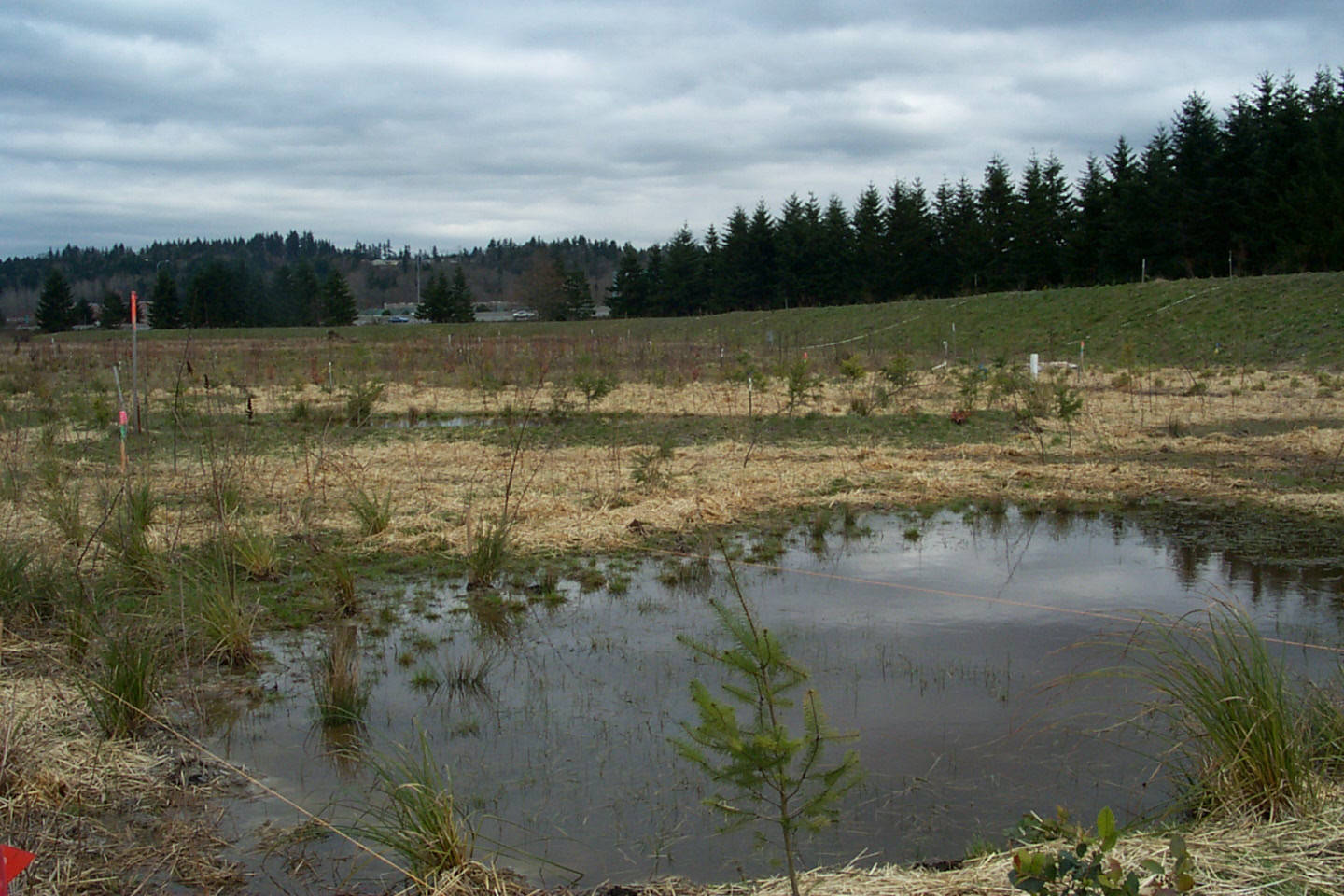
Restoration
Floodplain Meadow Restoration in Poland
Methods used to rehabilitate degraded floodplain meadows along the Vistula, Narew and Bug river systems.
Read article
Erosion Control
Erosion Control on Riverbanks
Bioengineering approaches to stabilising eroding banks using living plant material — willow fascines, brush mattresses and live stakes.
Read articleWhy Riparian Buffers
Functions of Vegetated River Margins
Riparian vegetation performs several interconnected roles that affect water quality, bank stability and local biodiversity.
Sediment Filtration
Dense root systems and ground-level plant stems trap suspended sediment carried in surface runoff before it reaches open water. Buffer widths of 10–15 m filter a significant fraction of incoming fine particles, depending on slope and soil type.
Bank Cohesion
Root networks of alder (Alnus glutinosa), willow (Salix spp.) and sedge (Carex spp.) bind alluvial soils and resist lateral erosion during high-flow events. The mechanical reinforcement is greatest in the upper metre of the bank profile.
Nutrient Uptake
Riparian plants intercept nitrates and phosphates moving through shallow groundwater pathways. This buffering effect reduces nutrient loading into rivers draining agricultural catchments — a documented concern across lowland Poland.
Flood Attenuation
Floodplain meadow vegetation increases hydraulic roughness, slowing the downstream propagation of flood peaks. Restored floodplains retain water temporarily, reducing peak discharge in rivers such as the Bzura and Pilica.
Habitat Continuity
Continuous riparian corridors allow movement of invertebrates, amphibians and small mammals between wetland patches. In fragmented agricultural landscapes, even narrow strips (5–8 m) provide meaningful connectivity.
Microclimate Regulation
Bankside canopy shading keeps water temperatures lower during summer months, maintaining dissolved oxygen levels suitable for fish and aquatic macroinvertebrates sensitive to thermal stress.
Polish Context
Riparian Planting in Poland
Polish river systems drain a predominantly agricultural landscape. The Vistula, Odra and their tributaries carry elevated sediment and nutrient loads, reflecting both historical land drainage and intensive tillage in their catchments.
Riparian buffer zones are addressed under Polish water law (Ustawa Prawo Wodne) and are consistent with obligations arising from the EU Water Framework Directive (2000/60/EC), which requires member states to achieve good ecological status in surface water bodies.
The Natura 2000 network includes many floodplain sites along major Polish rivers — including the Narew National Park (covering the Narew River valley), the Biebrza marshes and the Bug River corridor — where riparian and meadow habitats are designated for conservation.
The EU Water Framework Directive requires riparian buffer establishment as part of river basin management plans. In Poland, the State Water Management Authority (Wody Polskie) oversees implementation across 9 river basin districts.
Restoration projects in Poland have tended to focus on larger lowland rivers. Smaller tributary networks, where bank erosion and diffuse agricultural pollution are most acute, receive less systematic attention. This creates a practical need for documented guidance on small-scale buffer establishment and maintenance.
Updated: May 2026